There’s so much cool info about Pompeii that I couldn’t fit it all at the back of the book!
(Photos courtesy of Wikimedia)
News
As the New York Times and many other publications reported July 2024, many people in Pompeii died NOT from the volcanic eruption but from the accompanying earthquake. Buildings collapsed.

As Smithsonian Magazine reported in February 2024, “a team of three students won $700,000 this week for using artificial intelligence to read passages from an ancient papyrus scroll.”
Lost and Found Pompeii (Archaeology)

Only a few written records survive from the 1st century, so most of what we know about Pompeii comes from digs.
Right after the disaster, survivors scattered. Ash and rock flows had thoroughly covered Herculaneum, but the tops of columns in the Pompeii Forum poked out. Tunnels suggest that a few residents or treasure hunters returned to recover valuables. But skeletons also suggest that some died in the attempt, from trapped gasses or collapsing walls.
Statius, born in Naples and later the emperor’s court poet, wrote, “In the future, when crops grow again and this devastated wilderness blooms once more, will people believe towns, people and estates are all buried beneath the soil?”
It did seem that people forgot. Several hundred years passed. The Roman Empire fell. A thousand years passed. Vesuvius erupted multiple times.
Farmers digging wells occasionally struck marble objects with their shovels. In the 1590s, workers digging a canal near the Sarno River uncovered—and then reburied!—walls with frescos painted on them.

Interest picked up in the 1700s. King Charles of Bourbon ruled parts of southern Italy and summered at a seaside palace near Naples. Exploring for the king, military engineer Colonel Rocque Joachin de Alcurbierre excavated under the town of Resina and found a marble statue. Each day yielded more spectacular finds—because he had chiseled straight into Herculaneum!
Alcurbierre followed a lead to an area locals called La Civitá, the settlement. Although he didn’t know it yet, he had stumbled upon ancient Pompeii. It was easier to dig through the piled-up stones in Pompeii than the solidified mud of Herculaneum. But all the excavations posed challenges and dangers. Tunnels collapsed. The volcanic debris contained pockets of trapped gas, much of it poisonous carbon dioxide.
What had started out as a treasure hunt for the king gave way to the new fields of art history and archaeology. Scholars developed scientific methods. They catalogued objects and noted their location in order to understand their context. In the 1800s, life in ancient Greece and Rome was trending as a hot topic in Europe. The excavations in Campania drew many classics-minded travelers from across the continent.
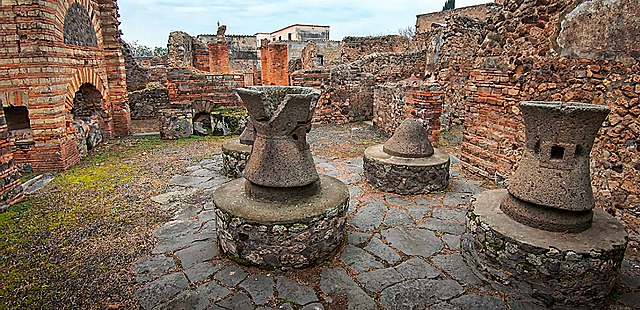
Italian archaeologist Giuseppe Fiorelli, director of excavations in Pompeii from the early 1860s to 1875, was very proud of his country’s heritage. He opened up the site to visitors—and charged an entrance fee. He started a school offering archaeology training and published reports on findings. Most notably, he put a human face on the re-emerging city.
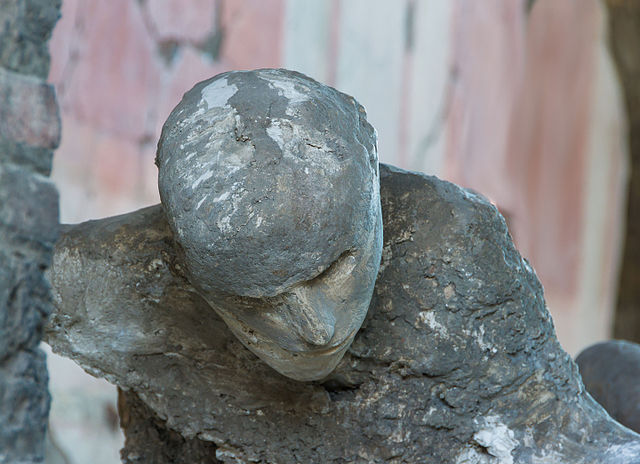
When Pompeians died, their bodies and clothes rotted away. (So did other organic material, such as the wood in furniture.) Fiorelli poured plaster into “holes” in hard-packed layers of volcanic debris. Then he excavated around the casts. What emerged were ghostly statues of people and animals overtaken by the eruption: a man covering his face, parents and their two daughters racing down a street, a dog trying to twist out of his collar.
Archaeologists are still uncovering the buried towns of Campania. Casting techniques improved. By 2003, archaeologists had made 1,044 casts—38% in ash inside buildings and 62% within pyroclastic surge deposits. Now they also use 21st century techniques, such as DNA analysis, to learn more about ancient Pompeians. About a third of the city remains unexcavated. Some scholars argue those areas should be left for future generations with even better tools.

The Tourist Trample
In 2018, more than 3.6 million people visited the Archaeological Park of Pompeii. Sometimes the number runs to 15,000 a day. Tourism boosts the local economy, but it adds to security and maintenance costs at the site. A few tourists pocket artifacts; a significant number ignore signs and barriers in pursuit of photos, using flash, for instance, which can damage paint. Even the most well-behaved visitors add to wear and tear. They’ve ruined the steps to the Temple of Apollo, according to one UNESCO official.

“Tourists are finishing what the volcano started in Pompeii,” declared the New York Post.
Not if the Italian government and concerned citizens can help it! They’re looking for a balance between preservation and education.
A Few More Fun Facts
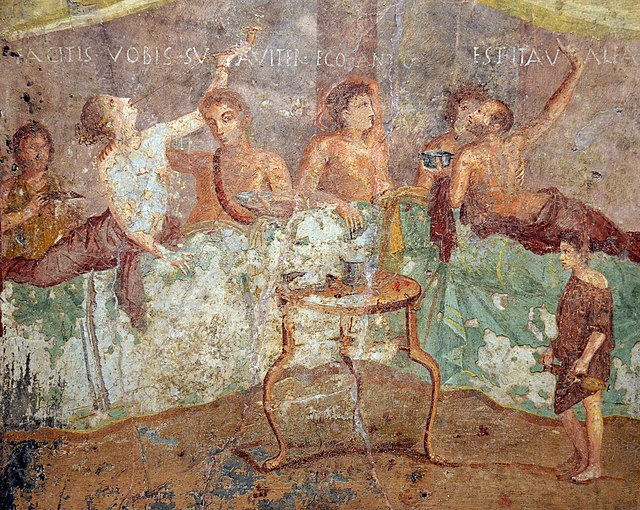
- You didn’t have to be rich to have fun—though boys and men had more access to the outdoors. Pompeians ran, swam, and fished. They boxed, wrestled, and played games similar to dodgeball and soccer. Popular board games included chess and a type of checkers. The government also supported performances and events to keep people contented.
- Wealthy Romans ate stretched out couches. Sometimes they gorged until they barfed.
- Roman toilets were no treat. Private toilets were like indoor outhouses, usually next to the kitchen. People using public toilets sometimes got bitten by creatures crawling out of the sewers. Also, methane gas built up and sometimes exploded. In the toilet, people wiped with a rock or wet sponge on a stick—sometimes shared. Archaeologists have learned a lot about people’s diet and health by excavating sewers in Pompeii and Herculaneum.
Interesting Reading
ARTICLES
Aldrete, Gregory. “Public Entertainment in Ancient Rome and the Origin of Gladiator Games.” Wondrium. https://www.wondriumdaily.com/public-entertainment-in-ancient-rome-and-the-origin-of-gladiator-games/#:~:text=In%20ancient%20Rome%2C%20the%20state,shows%2C%20and%20other%20unusual%20exhibitions.
Migdal, Erin. “What Did Ancient Romans Eat?” Getty. https://www.getty.edu/news/what-did-ancient-romans-eat/
Milani, Maria. “Toys in Ancient Rome.” Maria Milani Ancient Roman History, https://mariamilani.com/ancient_rome/ancient_roman_toys.htm
National Geographic Society. “Explorer Profile: Stephanie Grocke, Volcanologist.” National Geographic Education, https://education.nationalgeographic.org/resource/stephanie-grocke/
Shaw, Allyson. “Ancient Rome.” National Geographic Kids. https://kids.nationalgeographic.com/history/article/ancient-rome
“Slavery in Ancient Rome.” The British Museum. https://www.britishmuseum.org/exhibitions/nero-man-behind-myth/slavery-ancient-rome
Tronchin, Francesca. “Pompeii, an Introduction.” Smarthistory, https://smarthistory.org/pompeii-an-introduction/.
BOOKS
Eyewitness Volcano and Earthquake. DK Children’s: 2022. A rich illustrated combination of science and history about earthshaking events around the world, including the eruption of Vesuvius.
Lawrence, Caroline. The Thieves of Ostia (Roman Mysteries). Orion Children’s, 2002. A mystery novel set in AD 79 about a ship captain’s daughter and three diverse friends.
Parker, Vic. Pompeii AD 79: A City Buried by a Volcanic Eruption. Raintree, 2006. A nonfiction account of the disaster.
Sonneborn, Liz. Pompeii. Twenty-First Century Books, 2008. A history of the excavations and excavators.By DK
Tarshis, Lauren. I Survived: The Destruction of Pompeii, AD 79. Scholastic, 2014. A novel for young readers about an escape from the doomed city.
WEBSITES
Official Pompeii Archaeological Site, http://pompeiisites.org/en/
Ancient Pompeii Ruins Walking Tour, City Walks 38-minute video that premiered in 2023: https://www.youtube.com/watch?v=rdaLebepZvE
The Roman Empire in the 1st Century, companion to the PBS TV series: https://www.pbs.org/empires/romans/index.html
UNESCO World Heritage site for the Archaeological Areas of Pompei, Herculaneum and Torre Annunziata: https://whc.unesco.org/en/list/829/
United Nations of Roma Victrix, information about the Roman Empire: https://www.unrv.com/
FOR ADULTS
Beard, Mary. The Fires of Vesuvius: Pompeii Lost and Found. Harvard UP, 2008. Daily life in the ancient city explored by a classical historian.
Harris, Robert. Pompeii. Random House, 2003. A historical novel about the 79 eruption featuring an aqueduct engineer.
 Sylvia Whitman